PAULA STREIT
PORTFOLIO
Hello, nice to meet you!
To fully enjoy my portfolio, please switch to a larger screen
OUTPUT
Course project
User experience design
HIGHLIGHTS
design thinking process, prototyping
TIME FRAME
Semester 3
TOOLS
ADOBE xd, INDESIGN
Group members
maria höck, marc eisler,
emil laas, meike nieSSen
SUPERVISOR
PROF. JÜRGEN GRAEF, PROF. Klemens ehret
CONCEPT
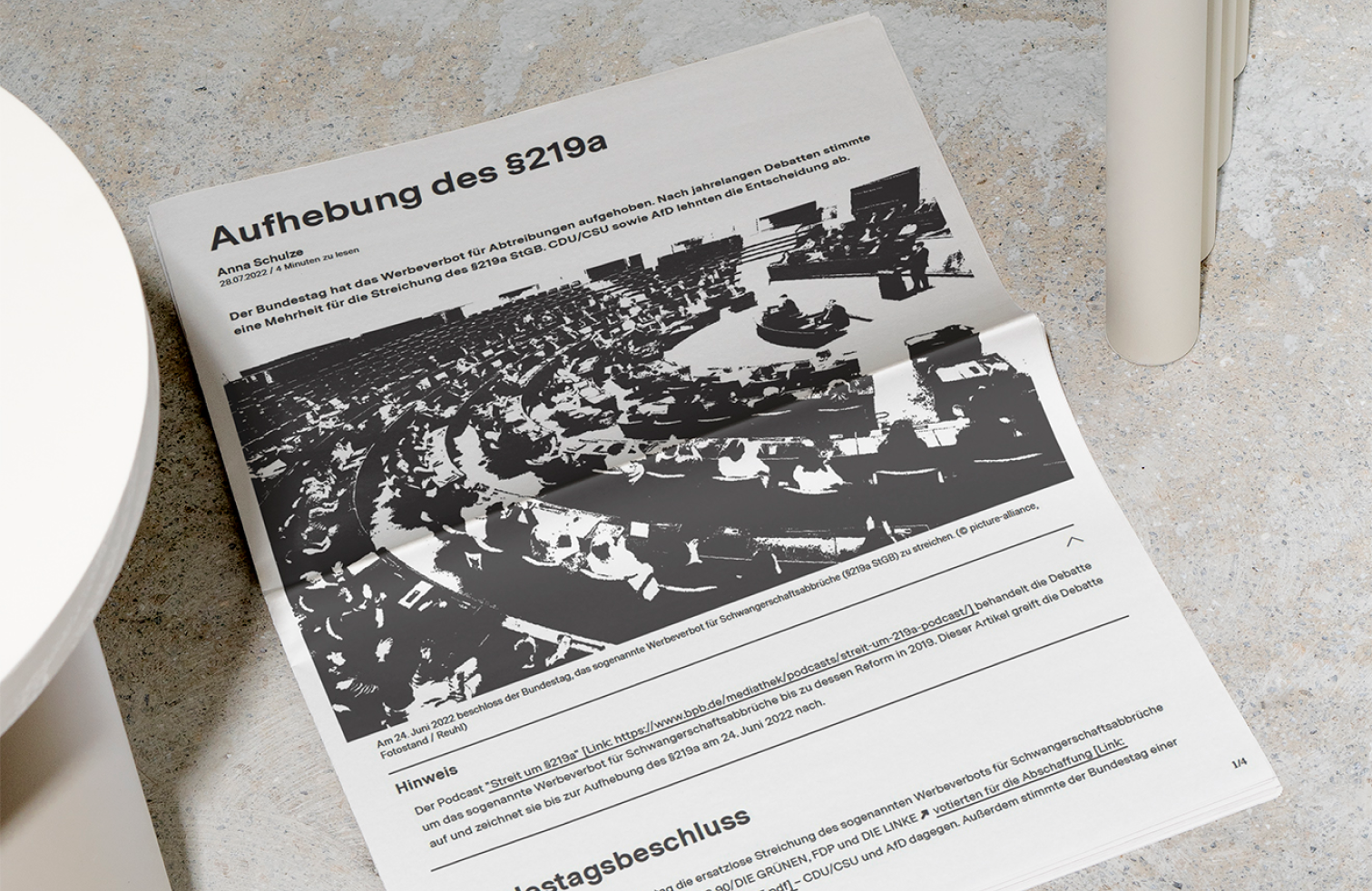
The ISA project was developed as part of a group assignment in the ‘User Experience Design’ course. The aim was to conduct a scientific analysis of a socially relevant topic and, on this basis, to develop a digital solution for those affected. Our group deliberately chose the topic of abortion, which was a major focus of public debate at the time of the project due to political developments in the USA and the repeal of Section 219a in Germany. (see Anna Schulze (2022): Aufhebung des §219a. In: Bundeszentrale für politische Bildung (bpb), 28.07.2022. Verfügbar unter: https://www.bpb.de/kurz-knapp/hintergrund-aktuell/511299/aufhebung-des-ss219a/ (Zugriff am: 15.04.2026)).
We started with the question of how information resources for those affected could be made more accessible and easier to understand, while reducing their emotional impact. Our analysis revealed that existing platforms were often overwhelming, confusing, and difficult to access, particularly in situations that are already stressful. This led us to develop the central idea of creating a user-centred, neutral and low-threshold information platform that offers guidance and takes individual needs into account.
Documentation
The project was developed using the design thinking process, which facilitates an iterative, user-centred approach. The topic was systematically addressed and continuously refined across six phases, from problem definition through research and ideation to implementation.
A key component was the accompanying documentation, which was expanded and reviewed after each iteration. Using methods such as user interviews, competitive analyses and use cases, we were able to gain in-depth insights into the needs and challenges of the target group. The iterative approach also made it possible to return to earlier phases at any time and integrate new findings into the process. This created a sound, scientifically underpinned foundation for the subsequent design of the website.
Wireframes and Implementation
In the fifth step of the design thinking process, an interactive prototype was developed. The aim was to create a clear, intuitive and user-friendly experience. The result is a neutral information website aimed primarily at those affected, but which also serves as a knowledge platform for relatives and other interested parties.
A key design element is the entry point via a short, guided test. This approach is based on the insight gained from the research that many existing websites are already overwhelming right from the start. The test guides users directly to the content relevant to them, thereby reducing information barriers.
The structure and navigation of the website were first developed as wireframes and then implemented as a clickable prototype in Adobe XD. The focus was on a clear information architecture, reduced visual complexity and a sensitive, respectful approach to users.
OUTPUT
Course project
User experience design
HIGHLIGHTS
design thinking process, prototyping
TIME FRAME
Semester 3
TOOLS
ADOBE xd, INDESIGN
Group members
maria höck, marc eisler,
emil laas, meike nieSSen
SUPERVISOR
PROF. JÜRGEN GRAEF, PROF. Klemens ehret
CONCEPT
The ISA project was developed as part of a group assignment in the ‘User Experience Design’ course. The aim was to conduct a scientific analysis of a socially relevant topic and, on this basis, to develop a digital solution for those affected. Our group deliberately chose the topic of abortion, which was a major focus of public debate at the time of the project due to political developments in the USA and the repeal of Section 219a in Germany. (see Anna Schulze (2022): Aufhebung des §219a. In: Bundeszentrale für politische Bildung (bpb), 28.07.2022. Verfügbar unter: https://www.bpb.de/kurz-knapp/hintergrund-aktuell/511299/aufhebung-des-ss219a/ (Zugriff am: 15.04.2026)).
We started with the question of how information resources for those affected could be made more accessible and easier to understand, while reducing their emotional impact. Our analysis revealed that existing platforms were often overwhelming, confusing, and difficult to access, particularly in situations that are already stressful. This led us to develop the central idea of creating a user-centred, neutral and low-threshold information platform that offers guidance and takes individual needs into account.
Documentation
The project was developed using the design thinking process, which facilitates an iterative, user-centred approach. The topic was systematically addressed and continuously refined across six phases, from problem definition through research and ideation to implementation.
A key component was the accompanying documentation, which was expanded and reviewed after each iteration. Using methods such as user interviews, competitive analyses and use cases, we were able to gain in-depth insights into the needs and challenges of the target group. The iterative approach also made it possible to return to earlier phases at any time and integrate new findings into the process. This created a sound, scientifically underpinned foundation for the subsequent design of the website.
Wireframes and Implementation
In the fifth step of the design thinking process, an interactive prototype was developed. The aim was to create a clear, intuitive and user-friendly experience. The result is a neutral information website aimed primarily at those affected, but which also serves as a knowledge platform for relatives and other interested parties.
A key design element is the entry point via a short, guided test. This approach is based on the insight gained from the research that many existing websites are already overwhelming right from the start. The test guides users directly to the content relevant to them, thereby reducing information barriers.
The structure and navigation of the website were first developed as wireframes and then implemented as a clickable prototype in Adobe XD. The focus was on a clear information architecture, reduced visual complexity and a sensitive, respectful approach to users.